Sea Ranger Service trains young people to become Sea Rangers: six months in paid employment, working on research, nature restoration and monitoring of protected areas at sea and along the coast. Their goals are big: restoring 1 million hectares of marine nature by 2040, and training 20,000 young people for a maritime career. Their teams are small, young and constantly on the move. Every year, a new group of Sea Rangers starts a six-month programme in which they have to take shape as a group. They are often strangers to each other, and within a week they have to learn to work together during an intensive bootcamp.
Sanne Boekhoff is Head of People there. She's an organisational psychologist, and when she first came across Working Genius in a training run by Annabelle, she was watching a little cautiously from the sidelines.
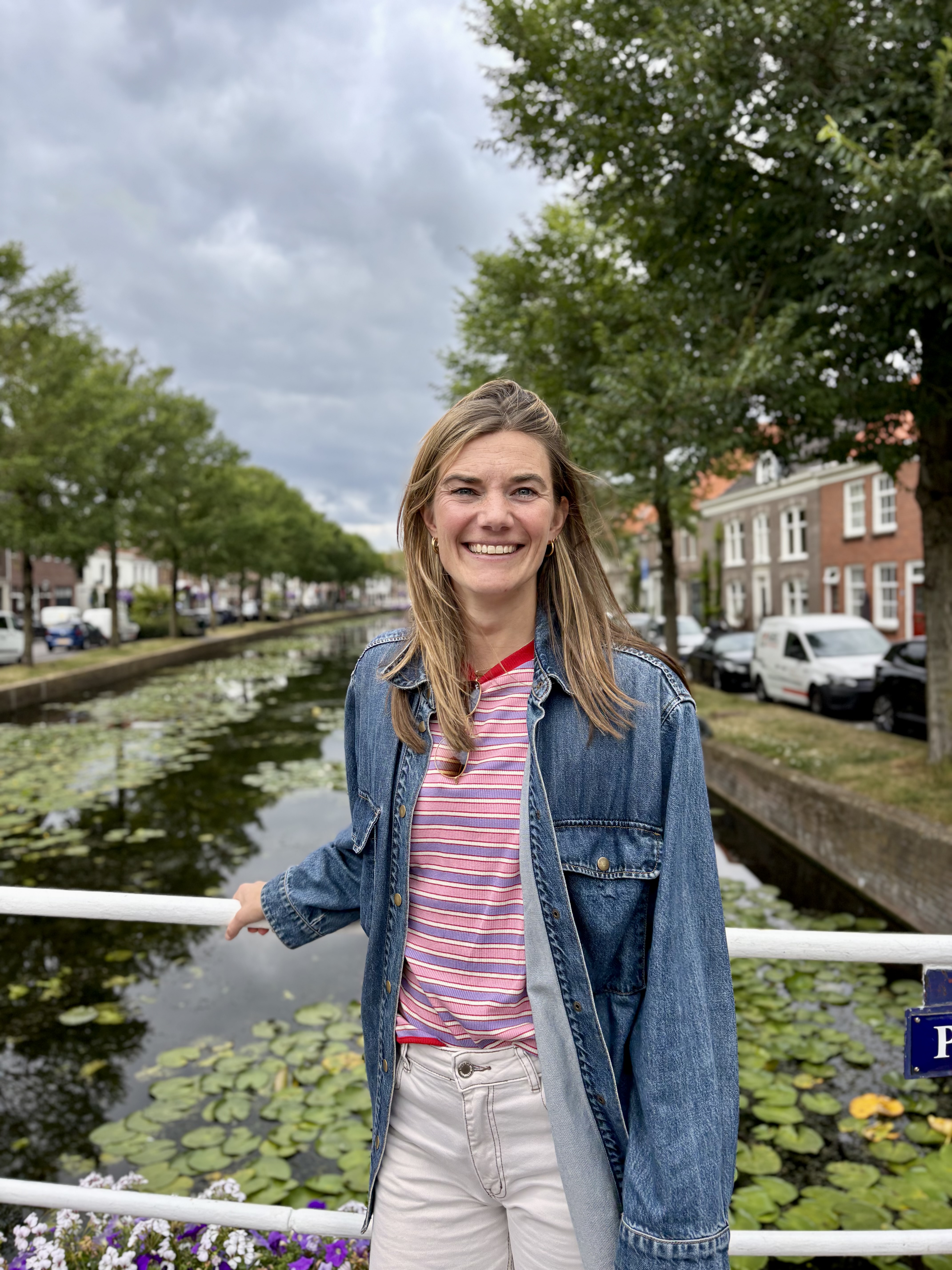
"I'm always a bit critical at first, that's my training. What's the reliability, is it validated, and what is it actually based on? But I became very positive very quickly, because I like that you don't just look at this is how this person communicates and this is how that one communicates (like with DISC)... you look at a whole process, and you look at the process of work and how you divide it well. It's less: this is who you are as a person. It's much more about what gives you energy," says Sanne.
That was the start of how Working Genius, three years later, runs through nearly every HR process in the organisation.
The challenge
Sea Rangers have six months. In that time, often with eight people they don't know, in a small environment, they have to form a team and get straight to work. That's exciting and nerve-racking for everyone. "Some of them have never been outside their own village."
In the more operational teams, Sanne also saw resistance. The English of the model didn't land by itself.
"I noticed in the more operational teams that they felt put in a box more quickly, or thought: what are these difficult words? What is discernment?" says Sanne.
Her explanation: people aren't always used to talking about themselves this way, they're young and don't have much work experience yet, and the language in the report is sometimes fairly academic for people who don't like reading. That's also exactly why she now wants to build a Sea Ranger version of the model, see below.
How it grew
Not a one-off workshop, but an adoption that deepened over several years. The first year centred on sessions with the steering group, the leadership level, and in parallel there was a pilot with the Sea Rangers themselves in the Netherlands. The second year brought the rollout to the Sea Rangers teams in the United Kingdom, where Sanne joined as co-facilitator alongside Annabelle. After that, she decided she wanted to be able to run it herself and did the facilitator course. Now she runs the trainings herself, every year again for all operational teams, and has woven it into recruitment, onboarding, quarterly meetings and the project management system. For the steering group, which she's part of herself, she prefers to bring in Annabelle. "I can't both facilitate and participate, that doesn't work well."
What it has brought them
A shared language. The first thing that stuck after the very first sessions: people kept using the words to name why something frustrates them and what they need. That language is now everywhere, in the monthly strategic meeting, in the quarterly sessions, and simply spontaneously between colleagues.
"You hear a lot of: oh, we need to discern this for a moment, we need to think this through properly," says Sanne.
A working team, faster. In an environment where teams have to function within days, speed is not a luxury.
"I think it speeds up the process of forming that team and really understanding each other. You want the team to get through the storming phase as quickly as possible, and this just speeds that up," says Sanne.
Ownership of how work is divided. This may well be the core: the model gives people a way to say something isn't working without it becoming a complaint, and to do something about it together.
"If we really see that someone is simply working too much in their frustrations, we've sometimes sat down together with the team and looked at: okay, what are other people's geniuses and frustrations, and can we redistribute tasks?" Sanne explains.
Embedded in systems, not in one-off training moments. It is now literally part of how a project starts.
"We also have a new project management system. When we start a new project, you first write a project brief where you think everything through: what needs to happen, which people do I need. And there's also a section where someone has to think: which geniuses are on my team, and what does that mean for the work that needs to be done," says Sanne.
Teams asking for it themselves. The clearest proof that something sticks is that people come back and ask for it.
"This year we happen to have a team that came back, who also worked with us last year. And they deliberately asked for a Working Genius training again. It had faded a bit and this way they could refresh it. They had found it very useful," says Sanne.
For Sea Ranger Service, People is one of its three official core values, alongside Safety and Purpose. It's no coincidence that Working Genius fits with that. "This helps to have the conversation in a safe way about where things are rubbing a bit, with a colleague for example," says Sanne.
Looking ahead
Sanne wants to take the next step: a Sea Ranger version of the model, in language that fits who they are.
"I want to adapt it, and really use our own (maybe more different) terms. That means it will simply come alive even more. And you really have to keep it alive: it's not that you're done after one training, you have to keep doing it," says Sanne.
Curious whether Working Genius could take root in your team this way too? I'll ask a few questions, you'll ask a few, and we'll know soon enough together whether it leads anywhere.
Source: interview with Sanne Boekhoff, Head of People at Sea Ranger Service (July 2026); nl.searangers.org/missie (accessed July 2026); Patrick Lencioni, The 6 Types of Working Genius (The Table Group, 2022).
Curious how Working Genius could help your team?
Get in touch